The “Brain Battery” Deficit: Why You’re Tired All the Time (And It’s Not Just Your Hormones)


If you are a woman over 40, you may recognise this feeling instantly.
It’s mid-afternoon. Your body isn’t aching. You aren’t desperate for a nap.
But your brain feels heavy.
You read the same email three times and still can’t take it in. You walk into a room and forget why you’re there. Simple decisions suddenly feel overwhelming.
This isn’t just tiredness.
It’s mental fatigue.
For years, women have been told this is just part of ageing. Or part of perimenopause. Or part of having too much on their plate.
“Sleep more.” “Drink more water.” “Reduce stress.”
All good advice. But often, not enough.
What if the problem isn’t just rest?
What if the problem is fuel?
The Kind of Tiredness Sleep Doesn’t Fix
Hormonal changes can absolutely affect energy and mood. No question.
But many women notice something more specific happening in their 40s.
Even on days when sleep is decent… Even when stress is manageable… The brain still feels flat.
This points to something else.
Not hormones alone. Not motivation. Not willpower.
It points to cellular energy availability.
The Brain Runs on Energy, Not Good Intentions
Your brain is one of the most energy-hungry organs in your body.
Every thought, decision, and emotional response uses fuel.
When energy supply can’t keep up with demand, performance drops.
That’s when you get:
- Slower thinking
- Poor concentration
- “Brain fog”
- Mental overwhelm
This is where a long-misunderstood nutrient comes in.
The “Gym Bro” Nutrient That Women Actually Need
For decades, one nutrient has been misunderstood and mis-marketed.
It’s been framed as something only bodybuilders need. Something linked to huge muscles and aggressive workouts.
That nutrient is creatine.
And when you strip away the marketing, creatine has very little to do with bulk.
It has everything to do with energy recycling.
What Creatine Actually Does (In Plain English)
Your cells use a molecule called ATP for energy.
ATP is like the cash in your wallet. It gets spent quickly.
Creatine helps regenerate ATP rapidly when demand spikes.
It does this by forming phosphocreatine, which acts like a backup battery.
When your brain is under pressure, stressed, or sleep-deprived, it burns through ATP fast.
If phosphocreatine stores are low, you hit the wall.
That wall feels like mental fatigue.
Why Creatine for Women Over 40 Matters More Than Ever
Women naturally store less creatine than men.
Most creatine is stored in muscle. Women have lower muscle mass on average. That means smaller storage capacity.
On top of that:
- Hormonal shifts affect how energy is transported and used
- Muscle mass declines with age unless actively supported
- Stress levels tend to increase, not decrease
This makes creatine for women over 40 especially relevant.
Not to lift heavier weights. But to keep energy stable.
Creatine for Mental Fatigue Isn’t a Trend. It’s Biology.
Mental fatigue isn’t a character flaw.
It’s often a sign the brain is under-fuelled.
When energy demand outpaces supply, the brain slows things down.
Creatine helps narrow that gap.
It doesn’t stimulate. It doesn’t mask exhaustion.
It supports the system that produces energy in the first place.
What the Research Is Starting to Show
Emerging research, including studies highlighted by mainstream science outlets, has shown creatine can support:
- Cognitive performance under stress
- Mental endurance
- Processing speed
- Brain performance during sleep deprivation
In one study, even a single dose helped improve cognitive function after sleep loss.
This doesn’t mean creatine replaces sleep.
It means it helps the brain cope better when life gets messy.
Creatine for Brain Fog: Why It Makes Sense
Brain fog is not a medical diagnosis.
It’s a description.
A feeling of mental heaviness. Poor clarity. Reduced focus.
Situations linked to brain fog often involve high energy demand:
- Chronic stress
- Burnout
- Post-viral fatigue
- Poor sleep
In these states, creatine levels in the brain can drop.
Supplementing creatine helps restore the energy buffer the brain relies on.
That’s why creatine for brain fog is gaining attention, especially among women juggling complex lives.
The Myth That Stops Women Taking Creatine
The biggest barrier is fear of weight gain or “bulking”.
Let’s be clear.
Creatine does not magically build muscle.
Muscle growth requires:
- Heavy training
- Excess calories
- Time
In normal daily doses, creatine supports muscle maintenance, not bulk.
This matters as women age.
Loss of muscle mass, known as sarcopenia, contributes to:
- Slower metabolism
- Frailty
- Lower energy
Creatine helps protect against that decline.
Creatine Isn’t Just Physical. It’s Emotional.
Energy and mood are closely linked.
When brain energy is low, mood often suffers.
Creatine plays a role in neurotransmitter production, the chemical messengers that allow brain cells to communicate.
Some studies suggest adequate creatine levels may support mood resilience, particularly in women.
Again, not as a treatment.
But as basic nutritional support.
Why Diet Alone Often Isn’t Enough
Creatine is found naturally in red meat and oily fish.
If you eat little meat, or none at all, intake is very low.
Vegetarians and plant-based eaters often have significantly lower creatine stores.
Research shows these groups often experience the biggest mental performance benefits when creatine is added.
It’s not because they’re deficient in effort.
It’s because diet alone doesn’t supply enough.
The “Middle-Age Energy Squeeze”
Around 40, several things collide:
- Lower muscle mass
- Higher stress
- Less recovery time
- Hormonal fluctuations
Energy demand goes up. Energy buffering goes down.
Creatine helps rebalance that equation.
The Hydration Confusion
Some people worry creatine causes water retention.
What actually happens is intracellular hydration.
Creatine draws water into muscle cells, where it supports function.
This is not surface-level bloating.
It’s functional hydration that helps cells work properly.
Why Consistency Beats Mega-Doses
You don’t need to “load” creatine.
Large doses can upset digestion.
A moderate daily amount, taken consistently, keeps the brain’s energy buffer topped up.
That’s what matters.
The Real Problem: Access, Not Awareness
If creatine is so useful, why aren’t more women taking it?
Three reasons.
The Diet Trap
To get enough creatine naturally, you’d need huge amounts of meat or fish daily.
That’s unrealistic.
The “Gym Bro” Trap
Most creatine products are marketed aggressively, with stimulants and artificial sweeteners.
Not exactly appealing.
The “Too Much Faff” Trap
Separate creatine powder. Separate collagen powder. Separate greens powder.
That’s a routine most people won’t stick to.
Why Most Women Still Fall Short
Research suggests around 6 out of 10 women don’t meet the daily creatine intake suggested by researchers.
Not from lack of interest.
From lack of convenience.
The 30-Second Solution: Collagen Greens
This is exactly the gap Collagen Greens was designed to fill.
Not as a bodybuilding supplement.
But as a daily foundation for energy, structure, and clarity.
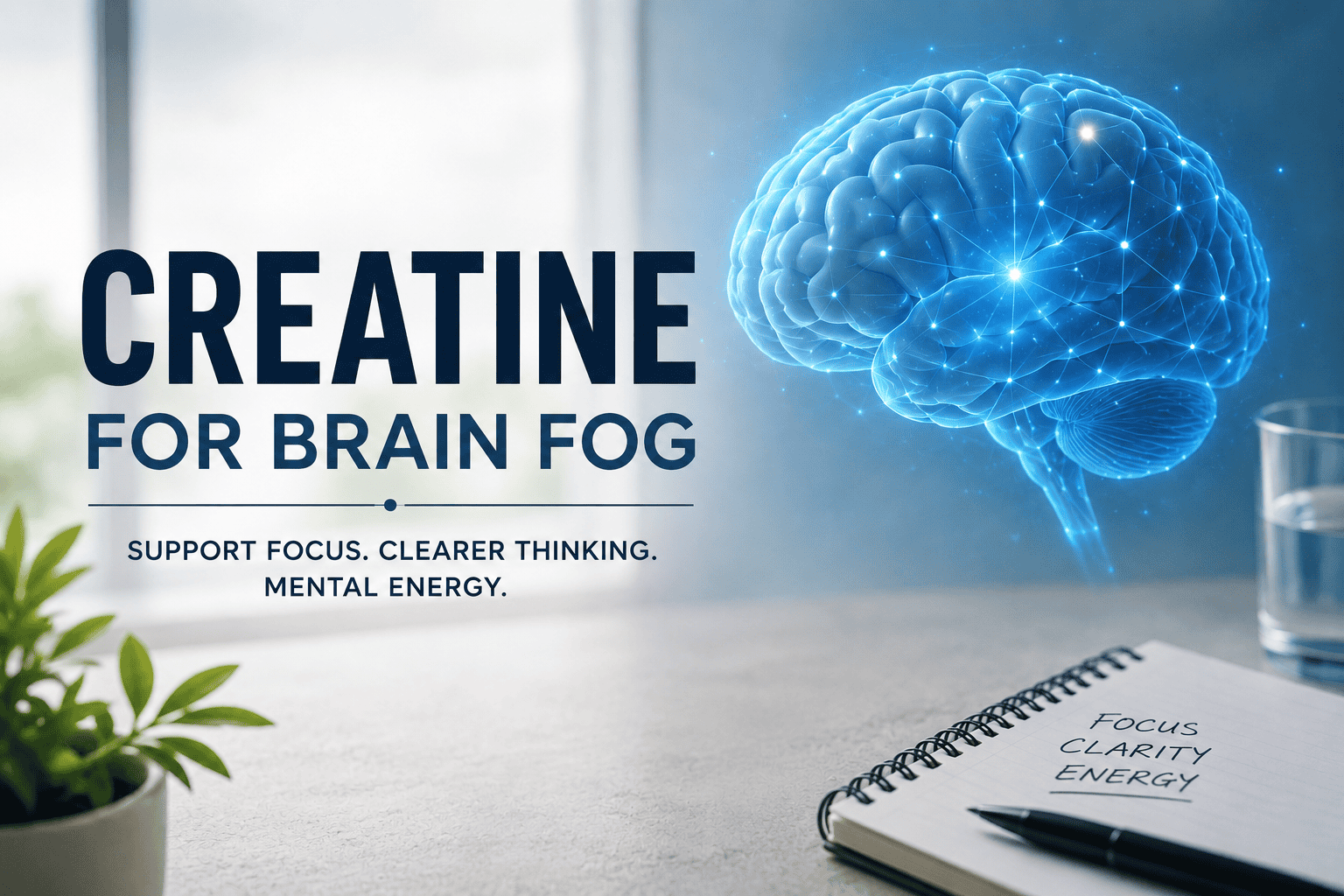
The Brain Battery
Each serving includes a functional dose of creatine monohydrate, the most researched and reliable form.
This helps support brain and muscle energy without stimulants.
Structural Support
Creatine works best when the body is supported.
That’s why Collagen Greens includes Type 1 & 3 collagen peptides, supporting joints, skin, and connective tissue.
Nutrient Density
You also get a blend of organic greens, including wheatgrass, spirulina, spinach, and broccoli.
This fills common nutrient gaps in seconds.
Easy to Stick To
Smooth. Neutral. No grit.
It mixes easily with water and doesn’t taste like pond water.
Designed for Real Life
No aggressive branding. No stimulants. No complicated rituals.
Just scoop, shake, and go.
Not a Hack. A Foundation.
Collagen Greens isn’t about chasing optimisation.
It’s about restoring what modern life quietly drains.
When your brain battery is topped up, everything feels easier.
Clearer thinking. Better focus. More capacity.


The Great Sugar Hangover: Why 'Wiping the Slate Clean' is Making You Feel Worse
Woke up with a pounding head after too much chocolate? Before you start a punishing juice cleanse, read this. We dismantle the myths behind the sugar hangover.

